


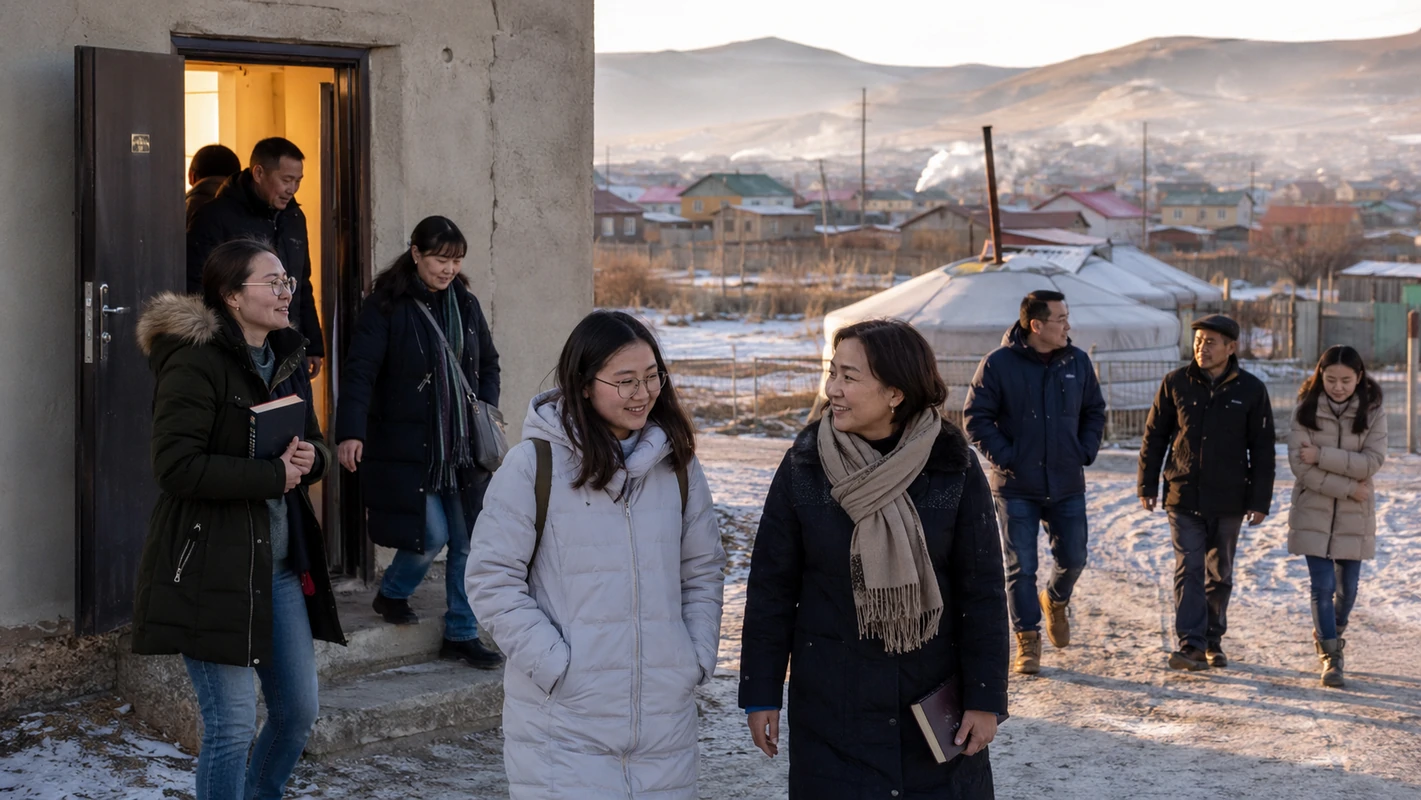
Mongolia is a vast landlocked country between Russia and China. Christians remain a small minority, but Mongolian believers increasingly lead churches, train pastors, pray together, serve vulnerable people, and carry the gospel beyond Ulaanbaatar. The country also needs prayer for honest government, responsible use of mineral wealth, cleaner winter air, resilient herder families, and wise care for its land and water.
Prayer Burden at a Glance
Pray for the gospel to bear lasting fruit among Mongolia’s people. Ask God to strengthen churches in biblical preaching, mature discipleship, sound doctrine, accountable local leadership, rural ministry, and compassionate service. Pray also for honest government, responsible care for the country’s mineral wealth and land, cleaner air, resilient herder families, and protection for people facing economic or environmental hardship.
Last verified: August 3, 2026
Why Mongolia Needs Prayer Now
Mongolia’s central prayer needs are clear gospel preaching, faithful churches, wise public leadership, and compassionate care for families affected by distance, pollution, economic vulnerability, and severe weather.
Mongolia’s deepest prayer need is spiritual. The 2020 census found that 40.6 percent of people aged 15 and older reported no religious identity. Among the whole population in that age group, approximately 51.7 percent identified as Buddhist, 3.2 percent as Muslim, 2.5 percent as shamanist, and 1.3 percent as Christian. These figures describe how people identify themselves. They cannot show whether individuals understand the gospel, have repented of sin, or trust in Jesus Christ. The detailed religious-freedom report explains the census categories and their limits.
The census category “Christian” includes communities with substantially different beliefs, including Protestant and evangelical churches, Roman Catholic and Orthodox churches, Latter-day Saints, Jehovah’s Witnesses, and other groups. Mongolia therefore needs more than an increase in the number of people who use a Christian label. It needs clear preaching of Christ, genuine conversion, faithful churches, and believers who are increasingly shaped by Scripture.
Church ministry is also affected by Mongolia’s geography. Long distances can isolate small congregations and make pastoral training, regional fellowship, Christian literature, and sustained church planting more difficult outside the capital. In Ulaanbaatar, churches serve within a rapidly growing city marked by high living costs, pressure on housing and public services, and severe winter pollution.
National leadership has changed repeatedly. Parliament confirmed Nyam-Osor Uchral as prime minister in March 2026, making him Mongolia’s third prime minister in approximately nine months. The rapid turnover followed political divisions and legislative deadlock and raised further questions about government stability, corruption, public trust, and economic direction. Churches should not become instruments of party politics, but Christians can pray for truthful, competent, and accountable government. Official Cabinet reporting continued to identify him as prime minister in June 2026.
Mongolia’s economy has grown through mining and agriculture. This creates employment and public revenue, but it also leaves the country vulnerable to changes in commodity prices, dependence on foreign markets, inflation, and disagreements over who benefits from national resources. The World Bank’s April 2026 outlook projected 5 percent growth for 2026 while warning about trade disruption, rising prices, infrastructure weaknesses, and continued dependence on mineral exports.
These realities call Christians to serious but hopeful prayer: prayer for salvation, healthy churches, honest government, responsible development, resilient families, and Christian witness that joins truth with compassion.
Country Snapshot
A brief orientation to Mongolia’s location, people, government, and religious setting.
Mongolia is one of the world’s most sparsely populated countries. Its approximately 3.57 million people live across a territory more than four times the size of Germany, although a large share of the population now lives in Ulaanbaatar. World Bank data places Mongolia’s 2025 population at 3,568,978, or approximately 3.57 million.
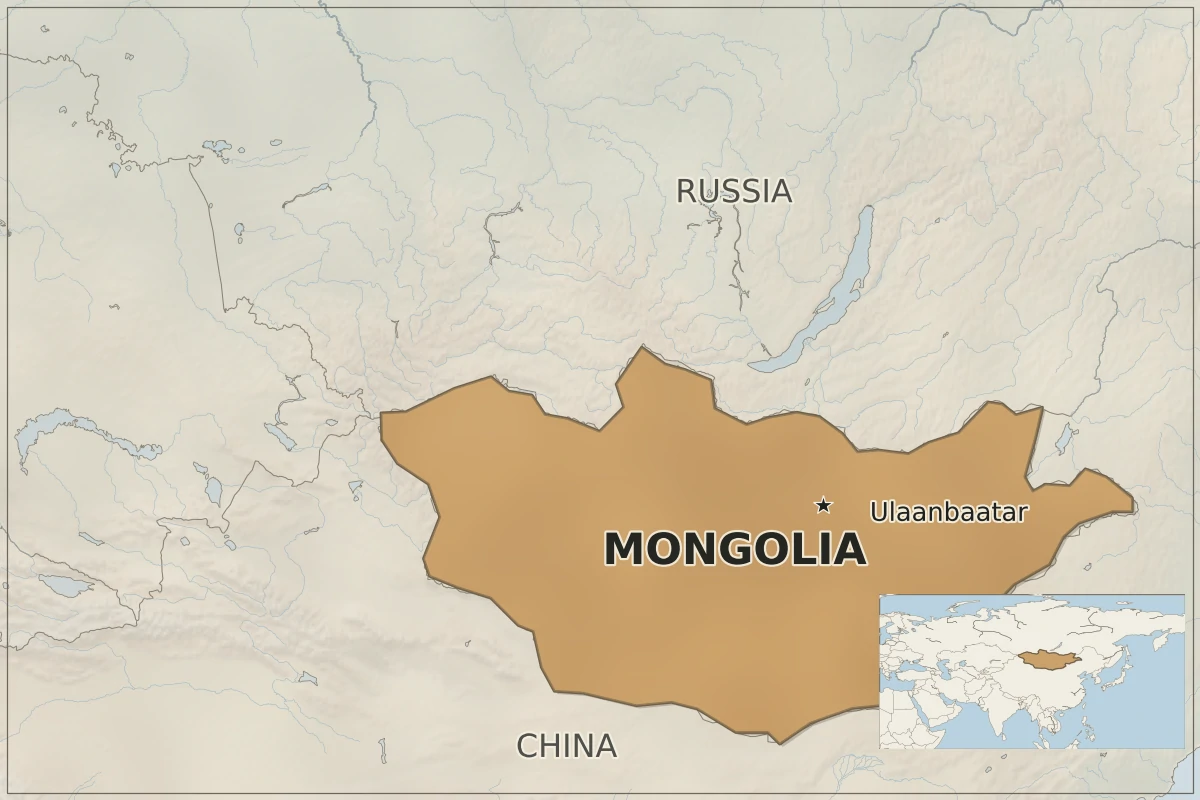
Mongolia’s location creates both opportunity and dependence. Russia and China are its only neighbouring countries and are important sources of fuel, transport routes, trade, and markets for mineral exports. Mongolia has also developed relationships with other international partners, but geography continues to limit many of its political and economic choices.
Ulaanbaatar contains the country’s main government institutions, universities, industries, businesses, and many of its churches. It also includes extensive ger districts where families may depend on coal-burning stoves during extreme winter cold. Rapid urban growth has contributed to congestion, pressure on housing and public services, and exceptionally severe winter air pollution.
Spiritual and Practical Challenges Affecting Christians and Churches
Mongolian churches need clear gospel teaching, mature leaders, stronger rural support, fair public administration, and wisdom as they serve communities affected by pollution, economic inequality, and environmental hardship.
Limited understanding of the gospel
Many Mongolians have little familiarity with the Bible or the central teachings of Christianity. Churches must explain the holiness of God, the reality of sin, the death and resurrection of Christ, salvation by grace through faith, the necessity of repentance, and the call to follow Christ within His church.
Discipleship, leadership, and sound doctrine
As congregations grow, they need pastors, elders, teachers, youth leaders, counsellors, and church planters who understand Scripture and live with integrity. Churches also need discernment to resist prosperity teaching, personality-centred leadership, cultic movements, manipulative evangelism, and attempts to combine Christian profession with spiritual practices that contradict Scripture.
Distance and rural church life
Mongolia’s size makes ministry outside Ulaanbaatar especially demanding. Christian leaders serving provincial centres or scattered rural communities may have fewer opportunities for theological study, pastoral friendship, mentoring, and access to Christian resources.
Religious registration and public misunderstanding
Mongolia’s constitution protects freedom of conscience and religion, and Christian churches generally worship openly. Religious organisations must nevertheless register with public authorities, and reports have described procedures that can vary between localities, repeated renewals, building requirements, visa difficulties, and delays. A March 2025 United Nations dialogue recorded both the government’s reform efforts and concerns about uneven local practice.
Mining, public trust, and unequal opportunity
Mining provides exports, employment, investment, and government revenue. It also raises difficult questions about corruption, environmental damage, regulation, dependence on foreign markets, and whether national wealth is improving life for ordinary families.
Air pollution, dzud, and environmental pressure
Winter air pollution is especially dangerous in Ulaanbaatar. Rural families face the different but related burdens of severe winters, livestock loss, debt, migration, water pressure, and damaged pastureland. Churches need wisdom to offer compassionate care without exploiting need and to support long-term recovery rather than only temporary relief.
Christian Life and Witness in Mongolia
Mongolian believers increasingly lead churches and ministries, while continuing to need deeper discipleship, accountable leadership, regional fellowship, and patient witness among neighbours of different beliefs.
Mongolia’s evangelical churches provide real reasons for thanksgiving. The Mongolia Evangelical Alliance was founded in 1997 with ten member churches. In 2022, the World Evangelical Alliance reported that the national alliance had grown to a network of more than 600 churches and Christian organisations from different denominations. Its stated concerns included discipleship, gospel proclamation, church cooperation, representation before government, and protection from cultic teaching.
This is an alliance-reported network figure, not a national census. Even so, it shows that evangelical Christianity in Mongolia is not simply a small collection of foreign-controlled missions. Mongolian believers increasingly carry responsibility for pastoral ministry, church leadership, prayer, discipleship, theological education, legal representation, and outreach.
The alliance’s 2026 half-year report describes weekly prayer meetings, regional gatherings for church leaders, governance training, theological work, legal assistance, and ministries involving women, children, and older people. The alliance’s report describes its own activities and does not establish the condition of every evangelical congregation in Mongolia.
The church needs spiritual depth as well as wider reach. Pastors must preach Scripture carefully. People who profess faith need patient discipleship. Christian families need teaching and pastoral care. Congregations also need accountability in doctrine, finances, safeguarding, and leadership.
Believers require grace to witness among Buddhist, Muslim, shamanist, nonreligious, and nominally Christian neighbours without contempt or fear. Faithful witness joins clear teaching about Christ with patience, hospitality, honest work, care for vulnerable people, and visible integrity.
Cooperation among churches can strengthen prayer, theological education, pastoral fellowship, legal understanding, and practical service where truth and conscience permit. Such cooperation should not treat serious doctrinal differences as unimportant or pressure congregations to compromise biblical convictions.
Recent Developments
These four developments help explain several of Mongolia’s present prayer needs in 2026.
-
January 2026
New research on children and air pollution
UNICEF published a detailed study of cleaner cooking, heating, and insulation in Mongolia. It found that household improvements can reduce exposure, but warned that they cannot solve the wider air-pollution crisis without coordinated government action and sustained investment.
Prayer significance: Pray for cleaner and affordable heating, well-insulated homes, reliable energy, wise urban planning, and protection for children, pregnant women, older people, and low-income families.
-
March 2026
Mongolia appoints another prime minister
Parliament confirmed Nyam-Osor Uchral as prime minister on March 30, making him Mongolia’s third prime minister in approximately nine months. His appointment followed the resignation of Gombojav Zandanshatar amid divisions within the governing party and deadlock in parliament. Associated Press also reported on the leadership change and the parliamentary deadlock surrounding it.
Prayer significance: Pray for stable and competent government, principled opposition, honest investigation of wrongdoing, respect for lawful institutions, and leaders who place public service above personal or party interest.
-
April 2026
Economic growth continues amid greater uncertainty
The World Bank projected economic growth of 5 percent in 2026 after strong agricultural and mining performance in 2025. It also warned about trade disruption, inflation, dependence on commodity exports, infrastructure gaps, and risks facing vulnerable households.
Prayer significance: Pray that economic growth will provide stable work, affordable necessities, responsible investment, stronger public services, and opportunities beyond mining and the capital.
-
August 2026
Mongolia prepares to host UNCCD COP17
Mongolia is scheduled to host the seventeenth Conference of the Parties to the United Nations Convention to Combat Desertification in Ulaanbaatar from August 17 to 28, 2026. The official COP17 page says the conference will address land restoration, drought, water, rangelands, food systems, and the wellbeing of pastoral communities.
Prayer significance: Pray that the gathering will lead to practical commitments for land restoration, responsible financing, drought preparation, and policies shaped by the experience of herders and affected rural communities.
Mongolian Culture and Faithful Christian Witness
The gospel can take root in Mongolian life without becoming culturally Western, but faithful contextualisation must remain governed by Scripture.
Mongolia has a strong national identity shaped by its language, history, pastoral heritage, family relationships, music, hospitality, relationship with the land, and memory of the Mongol Empire. Christian witness should never suggest that following Christ requires Mongolians to become culturally Western.
The gospel can be preached and lived in the Mongolian language and expressed through cultural forms that do not conflict with Scripture. Mongolian believers should be able to develop patterns of worship, teaching, hospitality, mercy, family life, and community service that are biblically faithful and can be sustained by local churches.
Cultural respect, however, cannot mean spiritual compromise. Practices that seek protection, blessing, guidance, mediation, or contact with spiritual powers apart from the living God cannot be absorbed into Christian discipleship. Churches need wisdom to distinguish national customs from worship and cultural identity from religious allegiance.
Christianity can appear foreign when it is presented mainly through imported personalities, foreign funding, unfamiliar church models, or promises of material improvement. Mongolian churches can answer this concern through local leadership, clear biblical teaching, financial integrity, mercy without manipulation, and believers whose lives show love for their neighbours.
Christians should speak respectfully about Buddhism, Islam, shamanic traditions, and nonreligious convictions. Respect does not require saying that all beliefs are equally true. Biblical love speaks plainly about Christ while rejecting ridicule, coercion, hostility, and careless generalisation.
The health of the Mongolian church will not be measured mainly by buildings, public influence, or reported decisions. It will be seen in faithful preaching, genuine conversion, holy lives, healthy families, accountable congregations, persevering prayer, compassionate service, and believers who remain faithful when following Christ is misunderstood or costly.
How to Pray
Pray for gospel fruit, faithful churches, wise leadership, resilient families, and compassionate witness throughout Mongolia.
-
Pray for repentance and faith in Christ. Ask God to open hearts to His Word and bring many Mongolians to repentance and saving faith in Jesus Christ. Pray that people will not merely adopt a Christian identity but will know, worship, and follow Christ.
-
Pray for faithful preaching and mature discipleship. Pray for pastors and teachers who explain Scripture accurately, proclaim the finished work of Christ, and help believers live with holiness, courage, humility, and discernment.
-
Pray for accountable Mongolian church leaders. Ask God to raise pastors, elders, church planters, theologians, counsellors, youth workers, and faithful women who teach and serve in appropriate biblical ways. Pray for humility, moral integrity, financial accountability, healthy oversight, and protection from abusive or personality-centred leadership.
-
Pray for sound doctrine. Pray that churches will recognise and resist prosperity teaching, syncretism, manipulative evangelism, cultic movements, and teachings that use Christian language while denying central gospel truths.
-
Pray for rural churches and isolated believers. Pray for congregations outside Ulaanbaatar and for Christians living far from established churches. Ask God to provide trained leaders, pastoral friendship, biblical resources, sustainable local giving, and wise use of travel and communication.
-
Pray for fair religious administration. Thank God for Mongolia’s broad religious freedom. Pray that registration, renewal, building, safety, and visa procedures will be clear, consistent, timely, and fairly administered.
-
Pray for integrity and stability in government. Pray for President Khurelsukh, Prime Minister Uchral, parliamentarians, judges, civil servants, provincial authorities, and local leaders. Ask God to restrain corruption, expose wrongdoing through just processes, and give leaders wisdom to serve the public good.
-
Pray for responsible use of mineral wealth. Pray for honest contracts, fair taxation, safe working conditions, environmental responsibility, and public revenue that strengthens healthcare, education, infrastructure, housing, and rural opportunity.
-
Pray for cleaner air and healthier homes. Ask God to protect families affected by winter pollution. Pray for affordable cleaner heating, better insulation, reliable electricity, effective public-health measures, and particular care for children and pregnant women.
-
Pray for herder families and the land. Pray for families rebuilding after livestock loss, debt, migration, and severe winters. Ask God to provide healthy pastureland, reliable water, effective early warnings, accessible insurance, veterinary support, and compassionate long-term assistance.
-
Pray for faithful public witness. Pray that Christians will serve their neighbours without coercion or hidden manipulation. Ask God to make churches known for truthfulness, faithful marriages, care for children, generous mercy, honest work, and patient love.
-
Pray for steadfast Christian hope. Pray that Mongolian believers will remain faithful, proclaim the gospel, and live in holiness and hope as they await Christ’s appearing. Ask God to advance His saving purposes and cause His kingdom to come throughout Mongolia.
Give Thanks
Mongolia’s needs are serious, but God has preserved freedoms, raised local leaders, and provided real opportunities for gospel ministry and compassionate service.
-
Give thanks for constitutional protections that generally allow Christians to gather, worship, teach, and serve openly. This freedom gives churches space to preach, disciple believers, train leaders, and serve their neighbours.
-
Give thanks for Mongolian pastors, churches, and ministry leaders who are carrying responsibility for the church’s life and future. Praise God for every place where Christ is faithfully proclaimed, Scripture is taught, believers are strengthened, and mercy is shown.
-
Give thanks for regional fellowship among pastors, prayer meetings, theological training, legal assistance, and ministries serving children, women, families, and older people. Ask God to deepen these efforts in biblical faithfulness and lasting usefulness.
-
Give thanks for believers serving in provincial and rural communities as well as in Ulaanbaatar. Praise God for Christians who continue to gather, teach, serve, and witness despite distance and limited resources.
-
Give thanks for practical efforts to improve heating, insulation, air quality, disaster preparation, and rural resilience. Pray that these efforts will reach vulnerable families and produce lasting protection.
-
Give thanks for agricultural recovery following the devastating 2023–24 dzud. Praise God for every family, community, public agency, and relief effort that has helped herders rebuild.
-
Give thanks for the opportunity to bring greater attention to desertification, drought, pastureland, and pastoral communities through COP17. Pray that the conference will lead to practical action rather than words alone.
-
Give thanks for every person who has heard the gospel, trusted Christ, received biblical teaching, joined a faithful congregation, or begun serving others in His name. Ask God to preserve and multiply genuine gospel fruit.
Last Verified / Update Note
This note helps readers understand when the guide was reviewed and which developments may affect how they use it for prayer.
Review Status
Reviewed for current prayer use
This guide reflects an August 3, 2026 review of Mongolia’s current president and prime minister; population and economic data; the 2020 population census; constitutional religious protections; recent reporting on religious registration; evangelical church networks and ministry activity; winter air pollution; the continuing effects of the 2023–24 dzud; and preparations for UNCCD COP17.
The main prayer burdens are gospel growth, faithful preaching, mature discipleship, accountable Mongolian church leadership, rural ministry, fair religious administration, government integrity, responsible use of mineral wealth, cleaner air, and resilient herder livelihoods.
Developments to watch include political stability under Prime Minister Uchral, progress on laws governing religious organisations, changes in local registration practice, future economic and mining-policy decisions, the proceedings and outcomes of COP17, winter clean-air measures, and preparation for future dzud emergencies.
Religious-composition figures come from Mongolia’s 2020 census and describe public religious identification rather than conversion or doctrinal faithfulness. Church-network figures are reported by evangelical organisations and are not a national census of active congregations. The named political office-holders and the COP17 schedule reflect information available on August 3, 2026 and may change.
Help keep this guide accurate and current
If you noticed a possible correction, broken link, or significant country update, please contact the Nations Prayer Directory so we can review it carefully.
Key Sources Consulted
Sources that materially informed this Mongolia prayer guide, including official Mongolian materials, national data, religious-freedom reporting, church sources, multilateral assessments, and independent reporting.
Official Mongolian government and national-data sources
- Office of the President of Mongolia. Used for the current head of state and official presidential activity through July 2026.
- Cabinet Secretariat of the Government of Mongolia. “Prime Minister N. Uchral meets Prime Minister of Kazakhstan Olzhas Bektenov.” Used to verify the current prime minister through official government reporting in June 2026.
- Constitutional Court of Mongolia. Constitution of Mongolia. Used for constitutional provisions on conscience, religion, discrimination, and relations between the state and religious institutions.
- National Statistics Office of Mongolia. “Population and Housing Census 2020.” Used as the primary national census authority and methodological basis for religious-composition figures.
Population, economy, public health, and environmental sources
- World Bank. “Mongolia — Data.” Used for the 2025 population figure.
- World Bank. “Mongolia’s Economy Stays Resilient but Faces Rising Uncertainty.” Used for recent economic performance, the 2026 forecast, inflation, mining dependence, infrastructure needs, and risks facing vulnerable households.
- UNICEF. “Working Towards Cleaner Air for Children in Mongolia.” Used for winter air pollution, children’s health, heating, insulation, and the limits of household-level interventions.
- United Nations Development Programme, Government of Mongolia, and UN partners. “Government of Mongolia and UN Mongolia Launch Socio-Economic Assessment and Impact of Dzud Reports.” Used for livestock losses and the social and economic consequences of the 2023–24 dzud.
- United Nations Convention to Combat Desertification. “UNCCD 17th Session of the Conference of the Parties.” Used for official COP17 dates and its planned focus on land restoration, drought, water, rangelands, food systems, and pastoral communities.
Religious freedom and public administration
- United Nations Human Rights Committee dialogue with Mongolia, March 2025. Used for the government’s account of registered religious organisations and legislative revision, together with concerns about uneven local registration procedures.
- U.S. Department of State. “2023 Report on International Religious Freedom: Mongolia,” hosted by ecoi.net. Used for religious demography, legal protections, registration requirements, reported administrative delays, government explanations, and public perceptions of nontraditional religions.
Church life and evangelical ministry
- Mongolia Evangelical Alliance. Used for the alliance’s stated purposes, nationally representative leadership structure, and public ministry activity.
- World Evangelical Alliance. “Growing Together with Mongolia Evangelical Alliance.” Used for the alliance’s history and its organisation-reported figure of more than 600 member churches and Christian organisations in 2022.
- Mongolia Evangelical Alliance. 2026 Half-Year Report. Used for current prayer meetings, regional leadership gatherings, governance training, theological work, legal ministry, and ministries serving different groups.
Independent reporting on political leadership
- Associated Press, hosted by WTOP. “Mongolia names new prime minister in bid to end legislative deadlock.” Used for independent context on the March 2026 leadership change and parliamentary divisions.
Source Context
How to read the sources behind this guide when religious statistics, church-network figures, political leadership, economic forecasts, and future events require careful interpretation.
Source Context
- Religious percentages. Mongolia’s 2020 census reported that 59.4 percent of people aged 15 and older identified with a religion, while 40.6 percent reported no religious identity. Some reports present Buddhist, Muslim, shamanist, Christian, and other percentages as shares of the religiously identifying group, while others present them as shares of the whole census population in that age group. This guide uses approximately 1.3 percent when describing Christian identification across the whole population aged 15 and older.
- Meaning of “Christian.” Census identification describes how people identify themselves. It does not establish conversion, regeneration, agreement with the biblical gospel, or the doctrinal faithfulness of a church. The category includes communities with significantly different teachings and practices.
- Church-network figures. The figure of more than 600 churches and organisations was reported by the Mongolia Evangelical Alliance through the World Evangelical Alliance in 2022. It is an alliance membership figure rather than an independently verified national census. Different sources may count churches, branches, fellowships, ministries, and inactive organisations differently.
- Current church activity. The Mongolia Evangelical Alliance’s 2026 half-year report provides useful evidence of current prayer meetings, regional leadership fellowship, governance training, theological work, legal ministry, and ministries serving women, children, and older people. Because this is the alliance’s own report, it documents the activities the alliance reports and does not establish the condition of every evangelical church in Mongolia.
- Religious registration. The 2023 religious-freedom report documents genuine administrative burdens, but some detailed figures refer to 2022 or earlier. The 2025 United Nations dialogue confirms that concern about uneven registration remained current while also recording the Mongolian government’s position that hundreds of religious organisations were registered and that legislative revision was being considered. The available evidence does not show that every congregation faces the same difficulty.
- Political leadership. Official Mongolian sources continued to identify President Khurelsukh and Prime Minister Uchral in their respective offices through July 2026. Mongolia experienced three prime ministers in approximately nine months, so the named office-holders should be understood as current on August 3, 2026.
- Population and economic projections. The World Bank reports a 2025 population of 3,568,978, approximately 3.57 million. Its projected 5 percent growth rate for 2026 is a forecast rather than a completed annual result and remains sensitive to trade, commodity prices, inflation, infrastructure, and later policy changes.
- Air pollution and dzud losses. UNICEF’s January 2026 report focuses particularly on household cooking, heating, and insulation measures while stressing the need for wider public action. The figure of more than 7.44 million livestock lost comes from assessments of the 2023–24 dzud released in May 2025 and describes the scale and continuing effects of that disaster rather than current livestock conditions in every province.
- COP17 timing. As of August 3, 2026, COP17 was scheduled to take place in Ulaanbaatar from August 17 to 28, 2026. The conference had not yet taken place as of August 3, 2026.
- Source mix. The guide uses direct Mongolian government and constitutional sources for official positions, the National Statistics Office for census authority, the Mongolia Evangelical Alliance for its own ministry activity, United Nations and World Bank sources for public conditions, and independent reporting for political context. Direct current English-language official information on religious-registration practice remains limited.
A Closing Prayer for Mongolia
A concise prayer gathering Mongolia’s present spiritual, church, public, and humanitarian burdens before the Lord.


