

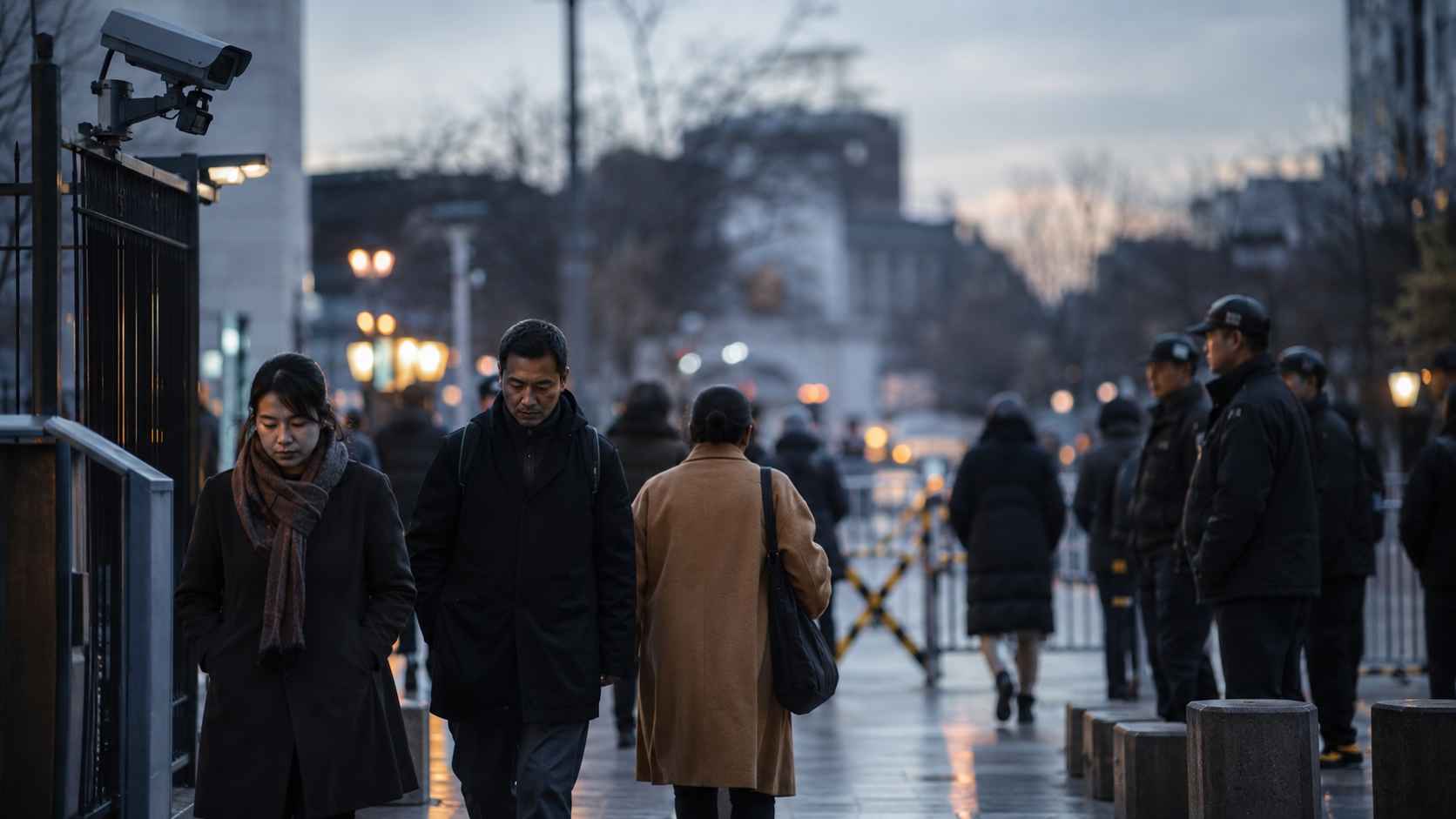
State pressure does not always arrive through one dramatic headline. Often it advances through quieter instruments of control: surveillance, censorship, arbitrary detention, punitive law, forced registration, pressured silence, restricted worship, weakened institutions, and the growing cost of living openly according to conscience. In the countries below, that pressure is not merely theoretical or occasional. It is shaping public life, burdening families, narrowing church space, and making ordinary faithfulness more costly.
This list is meant to help readers pray with clearer understanding. It is not a detached severity scoreboard or a political slogan. It is a current, comparative prayer brief for Christians who want to remember believers under pressure, pray for those silenced by fear, ask God to restrain evil, and seek mercy for nations where coercive power is weighing heavily on truth, worship, witness, and human dignity.
List Burden at a Glance
A compact summary of the present prayer burden behind this ranking.
This month’s burden is the heavy narrowing of public life under coercive state power. In these countries, surveillance, prison, censorship, forced registration, exile, punitive law, religious restriction, and fear are pressing on families, churches, journalists, lawyers, activists, and ordinary citizens. The strongest upper tier combines near-total control with very little lawful breathing room; the lower tier remains severe, though movement in the ranking reflects sharper deterioration, partial releases, active conflict, or changing current pressure elsewhere.
Last Reviewed / Ranking Date
The assessment date for this current prayer-burden ranking.
Ranking assessed: May 21, 2026
How to Read This Ranking
This is a present prayer-burden ranking, not a scoreboard of national worth.
This is a present prayer-burden ranking, not a ranking of national worth, human dignity, divine concern, or permanent status. A country outside the Top Ten may still carry grave suffering and urgent prayer needs. A country that falls in rank has not necessarily improved; it may simply have been overtaken by sharper deterioration elsewhere. Likewise, a country that remains unchanged may still be worsening.
The purpose of this list is not to stir detached outrage or produce a political scoreboard. It is to help Christians pray with clearer understanding for places where state power is now bearing heavily on conscience, public life, church life, and ordinary endurance.
What Changed Since the Previous Ranking
Major movement from the April 2026 working ranking.
Compared with the April 2026 working ranking, the top two remain unchanged: North Korea and Eritrea still represent the clearest upper tier of entrenched state domination. No countries entered or exited the Top Ten this month; the movement occurred within the same overall set of countries.
Afghanistan rises above Turkmenistan because Taliban repression of women, girls, media, and public life remains highly acute, with fresh May 2026 journalist detentions adding current urgency. Iran rises sharply because the execution surge, January 2026 protest crackdown, and national-security prosecutions now make it one of the most acute active crackdown cases. Russia rises slightly because April 2026 action against Memorial and the continuing foreign-agent / undesirable-organization system sharpen the current crackdown. Belarus falls, not because the system is mild, but because prisoner releases and a rare permitted evangelical event create a small current-relief note while severe repression still remains.
Previous ranking reviewed: APRIL 2026.
Ranking Method Note
How this ranking weighed present state pressure, source credibility, and prayer usefulness.
This ranking assesses countries where state pressure is currently broad, coercive, entrenched, and prayer-significant. It is not a general “worst governments” list, a democracy index, a persecution-only ranking, or a digest of the loudest headlines.
Recent and credible sources were prioritized, especially Human Rights Watch’s World Report 2026 country chapters, Freedom House’s Freedom in the World 2026 country reports, the U.S. Commission on International Religious Freedom (USCIRF) 2026 annual report and country updates, Amnesty International reporting, relevant United Nations material, and recent current-affairs reporting, including Associated Press (AP) coverage of Afghanistan journalist detentions, Belarus prisoner-release and religious-registration context, and Russia’s Memorial criminalization.
The broad sweep seriously considered North Korea, Eritrea, Afghanistan, Turkmenistan, China, Iran, Myanmar, Nicaragua, Russia, Belarus, Cuba, Venezuela, Tajikistan, Vietnam, Saudi Arabia, Burkina Faso, Syria, Egypt, Ethiopia, and several additional authoritarian or fast-tightening states.
The final ten were chosen by weighing not only severity, but also breadth, institutional entrenchment, current escalation, national reach, and usefulness for informed Christian prayer. The close-call zone is especially tight from ranks 7–10; those positions should be read as reasoned comparative judgments, not mathematical precision.
Working Definition
What “heavy state pressure / crackdown” means in this ranking.
For this ranking, heavy state pressure / crackdown means broad, coercive state action that materially restricts public life, conscience, worship, speech, association, media, dissent, civil society, education, movement, or ordinary civic participation. It may include arrests, detention, raids, enforced disappearances, intimidation, forced exile, citizenship stripping, surveillance, censorship, punitive registration systems, administrative closures, politicized courts, restrictive national-security laws, anti-extremism laws, religious-control laws, or state-backed fear.
A country does not qualify merely because it is authoritarian, controversial, poor, at war, or frequently criticized. It qualifies when state power is actively and substantially narrowing the space in which people can speak, worship, gather, organize, report, dissent, teach, serve, or live openly according to conscience.
Ranking Criteria
The weighted framework used for this state-pressure / crackdown ranking.
The weighted framework used here follows the canonical state-pressure / crackdown criteria:
Severity of State Pressure — 25%
Arrests, detention, raids, closures, censorship, surveillance, intimidation, punitive laws, and criminalization of dissent or organization.Breadth Across National Life — 20%
Pressure on churches, religious minorities, speech, protest, association, media, education, legal defense, civil society, families, and everyday public fear.Structural and Institutional Entrenchment — 20%
How deeply repression is embedded in law, courts, police, bureaucracy, ruling-party practice, security bodies, registration systems, and administrative control.Current Urgency / Escalation — 15%
Whether recent developments show a sharper crackdown, new laws, mass arrests, worsening restrictions, or renewed fear.Reach and National Impact — 10%
Whether pressure is localized or materially shaping national life across large populations and regions.Prayer-and-Ministry Relevance — 10%
How directly the situation shapes church endurance, Christian witness, public worship, mercy ministry, conscience, family fear, and informed prayer.
Top Ten Countries
The ranked countries facing the heaviest state pressure / crackdown in May 2026.
North Korea
Totalizing state control over information, movement, conscience, labor, and daily life.
Why it qualifies: North Korea remains the clearest case of near-total state pressure. Human Rights Watch describes it as one of the world’s most repressive countries and says severe restrictions continued in 2025, while a United Nations review found increased surveillance, censorship, forced labor, and severe punishments over the past decade. Human Rights Watch also notes that North Korea maintains obedience through torture, executions, arbitrary imprisonment, collective punishment, forced labor, and severe restrictions on expression, assembly, religion, and information.
Why it ranks here: North Korea ranks first because state pressure is not merely aimed at dissidents; it is woven into almost every part of national life. The state controls information, punishes unauthorized media access, restricts cross-border communication, and maintains an exceptionally closed coercive system.
Movement since previous ranking: Unchanged at #1. This does not mean conditions are static or acceptable. It means no other country in the sweep showed a more totalizing present state-control environment.
Key current burden: Totalitarian control, information isolation, forced labor, prison camps, political fear, and severe restrictions on worship and conscience.
Human / church / national impact: Ordinary life is shaped by fear, surveillance, hunger, punishment, and restricted access to outside truth. Open Christian worship remains extraordinarily dangerous.
Prayer Focus: Pray for hidden believers, prisoners, families under surveillance, and those starved of truth. Ask God to preserve His church in secrecy, open channels of truth, restrain cruelty, and sustain faith where public life is almost entirely closed.
Key current sources used: Human Rights Watch, World Report 2026: North Korea; United Nations human-rights findings summarized by Human Rights Watch.
Eritrea
Militarized authoritarian control, indefinite national service, religious restriction, and arbitrary detention.
Why it qualifies: Eritrea remains one of the world’s most coercive state-pressure environments. Human Rights Watch says the government maintained an “iron grip” on the population at home and abroad, repressing freedom of opinion, religion, and expression while forcing much of the adult population into indefinite military or national service. Human Rights Watch also describes widespread unlawful detentions and enforced disappearances, including of perceived critics, journalists, government officials, and alleged draft evaders.
Why it ranks here: Eritrea ranks second because repression is deeply institutionalized, long-running, and national in scope. It is slightly less globally surveillant and information-totalizing than North Korea, but its combination of indefinite service, arbitrary detention, religious control, and the absence of meaningful constitutional limits keeps it in the highest tier.
Movement since previous ranking: Unchanged at #2. No credible current relief signal was strong enough to move Eritrea lower, and the structural repression remains extremely severe.
Key current burden: Indefinite national service, forced labor, arbitrary detention, disappeared prisoners, religious restriction, and forced flight.
Human / church / national impact: Families are fractured by forced service and exile. Churches outside recognized structures remain vulnerable. Civil life is constrained by fear and state power.
Prayer Focus: Pray for prisoners, conscripts, families separated by exile, and believers worshiping under restriction. Ask God to strengthen His people in endurance and to bring light, mercy, and accountability into places where fear has become normal.
Key current sources used: Human Rights Watch, World Report 2026: Eritrea; Amnesty International 2025–26 Eritrea country material.
Afghanistan
Taliban rule narrowing women’s lives, media freedom, public space, and conscience.
Why it qualifies: Afghanistan rises into the top three because Taliban rule continues to press down on women, girls, journalists, civil society, and public life with unusual severity. Human Rights Watch says the Taliban increased repression of women and girls in 2025, enforced new regulations curbing media freedom, maintained bans on post-primary education and employment restrictions, and detained people for alleged morality-law infractions. Associated Press reported in May 2026 that the Taliban detained at least three journalists on undisclosed charges, while the United Nations mission expressed concern about detentions, assaults on journalists, and property confiscation during search operations.
Why it ranks here: Afghanistan now outranks Turkmenistan by a narrow margin because the current pressure is not only structurally severe but visibly acute. The systematic exclusion of women and girls from public life, combined with morality-law enforcement and recent media pressure, gives Afghanistan a sharper present-crackdown profile.
Movement since previous ranking: Up from #4 to #3. This movement reflects continuing Taliban repression and fresh current pressure on media freedom, not a claim that Turkmenistan improved.
Key current burden: Gender-based exclusion, morality-law enforcement, media suppression, arbitrary detention, fear, and hidden Christian vulnerability.
Human / church / national impact: Half the population faces systematic public exclusion. Journalists and critics operate under fear. Christian life is tiny, hidden, and extremely vulnerable.
Prayer Focus: Pray for Afghan women and girls, hidden believers, journalists, detained critics, and families living under coercive morality rule. Ask God to preserve hope, protect the vulnerable, and strengthen the church in secrecy and courage.
Key current sources used: Human Rights Watch, “Afghanistan: Taliban Repression Intensifies”; Associated Press May 2026 reporting on detained Afghan journalists.
Turkmenistan
Closed-state repression through movement controls, censorship, religious restriction, and fear.
Why it qualifies: Turkmenistan remains one of the world’s most closed authoritarian states. Human Rights Watch says the government continues to severely restrict expression, association, religion, peaceful assembly, independent media, and internet access. It also targets civic activists, government critics, and families, including those in exile, while continuing politically motivated prosecutions and leaving the fate of disappeared prisoners unknown.
Why it ranks here: Turkmenistan remains above most countries because its repression is broad, institutional, and national. It moves below Afghanistan only because Afghanistan’s current coercion — especially toward women, girls, and media — shows a more acute present escalation, while Turkmenistan’s repression is more frozen and closed-state in character.
Movement since previous ranking: Down from #3 to #4. This is comparative movement, not improvement. Turkmenistan remains a severe, entrenched state-pressure country.
Key current burden: Movement restrictions, internet control, religious restriction, suppression of dissent, enforced disappearances, and fear of state punishment.
Human / church / national impact: Citizens and believers have little lawful space for independent worship, civil society, dissent, or free movement.
Prayer Focus: Pray for believers and ordinary citizens living under suffocating control. Ask God to sustain quiet faithfulness, protect families targeted by the state, and open doors for truth and worship.
Key current sources used: Human Rights Watch, World Report 2026: Turkmenistan; U.S. Commission on International Religious Freedom 2026 Turkmenistan material.
China
High-capacity party-state pressure across speech, religion, surveillance, ethnic minorities, and Hong Kong.
Why it qualifies: China’s state pressure is among the world’s broadest and most technologically sophisticated. Human Rights Watch says Chinese authorities systematically deny freedom of expression, association, assembly, and religion; persecute critics; impose harsh forced assimilation on Tibetans and Uyghurs; and maintain a repressive national-security regime in Hong Kong. Human Rights Watch also notes that China controls major information channels, operates one of the world’s most stringent surveillance and censorship regimes, and uses the party-controlled legal system to punish, disappear, and imprison critics.
Why it ranks here: China ranks fifth because its breadth and capacity are immense, but the top four still represent more totalized or acutely suffocating national environments. China remains the strongest large-state example of integrated surveillance, ideological control, religious restriction, ethnic assimilation, and national-security pressure. The U.S. Commission on International Religious Freedom’s 2026 annual report release also highlights arrests of underground church members in China as part of broader religious-freedom abuse.
Movement since previous ranking: Unchanged at #5. China’s rank remains stable because the breadth and scale are unmatched outside the highest tier, even as Iran’s acute deterioration now presses closely from below.
Key current burden: Surveillance, censorship, underground church pressure, Xinjiang imprisonment, Tibet assimilation, Hong Kong national-security prosecutions, and extraterritorial intimidation.
Human / church / national impact: Churches, minority communities, dissidents, lawyers, journalists, students, and families are all affected by a state that treats independent conviction as a political risk.
Prayer Focus: Pray for churches under surveillance, Uyghurs, Tibetans, Hong Kong believers and dissidents, imprisoned critics, and families pressured by the security state. Ask God for courage, wisdom, truth, and endurance.
Key current sources used: Human Rights Watch, World Report 2026: China; U.S. Commission on International Religious Freedom 2026 Annual Report release.
Iran
A sharply escalating security-state crackdown marked by executions, mass arrests, and national-security repression.
Why it qualifies: Iran rises sharply because the current crackdown is severe, active, and deadly. Human Rights Watch says Iran’s human-rights situation spiraled further into crisis in 2025, with the highest number of known executions in decades, mass and arbitrary arrests, persecution of women, ethnic and religious minorities, and repression of real or perceived dissidents. Amnesty International reported on January 23, 2026, that Iranian authorities had unleashed a coordinated, militarized clampdown after January protest massacres, including sweeping arbitrary detentions, enforced disappearances, bans on gatherings, and attacks to silence families of victims. Amnesty’s May 2026 global death-penalty report recorded 2,707 executions worldwide in 2025, excluding China, with Iran driving much of the surge.
Why it ranks here: Iran ranks below China only because China’s pressure is broader, more technologically integrated, and more structurally pervasive across a larger population. But Iran’s acute execution surge, protest repression, and national-security prosecutions now place it above Myanmar, Nicaragua, Russia, and Belarus in current crackdown urgency.
Movement since previous ranking: Up from #9 to #6. This is the most important upward movement in the list. The rise is driven by the execution surge, the January 2026 militarized protest crackdown, and the use of national-security logic to deepen repression.
Key current burden: Executions, mass arrests, protest repression, minority targeting, internet and information pressure, and fear around dissent.
Human / church / national impact: Families of detainees, protesters, ethnic and religious minorities, women, journalists, and underground believers face a climate of intimidation and punishment.
Prayer Focus: Pray for prisoners, grieving families, persecuted minorities, underground Christians, and those facing execution or coercive charges. Ask God to restrain bloodshed, expose injustice, comfort the terrified, and sustain faithful witness.
Key current sources used: Human Rights Watch, World Report 2026: Iran; Amnesty International, “Iran: Authorities unleash heavily militarized clampdown”; Amnesty International, Death Sentences and Executions 2025.
Myanmar
Military rule, collapsed rule of law, politicized courts, surveillance, and anti-dissent violence.
Why it qualifies: Myanmar remains one of the world’s harshest active state-crackdown environments. Human Rights Watch says rule of law has collapsed since the coup, lawyers face systematic obstacles, and politically sensitive cases are handled in special prison courts or military tribunals. The junta’s “election protection” law criminalized criticism of its election process and led to hundreds of arrests, including children; its cybersecurity law further restricts online content and expands surveillance.
Why it ranks here: Myanmar ranks below Iran this month because Iran’s current execution-and-protest crackdown has intensified sharply. Myanmar remains above Nicaragua, Russia, and Belarus because the junta combines state repression with military rule, digital controls, politicized courts, forced exile pressure, and conflict-linked coercion.
Movement since previous ranking: Down from #6 to #7. This does not reflect meaningful relief. Myanmar fell because Iran’s current crackdown rose sharply past it.
Key current burden: Military tribunals, political arrests, surveillance laws, censorship, media restrictions, intimidation of exiles, and repression amid civil conflict.
Human / church / national impact: Churches, humanitarian workers, lawyers, journalists, ethnic minorities, activists, and displaced families face overlapping pressure from war and military coercion.
Prayer Focus: Pray for churches and families under military rule, for imprisoned dissidents, for ethnic minorities, and for those serving amid danger. Ask God to preserve mercy, truth, and courage under the junta’s pressure.
Key current sources used: Human Rights Watch, World Report 2026: Myanmar; Amnesty International / Fortify Rights / Human Rights Watch January 2026 joint reporting on junta abuses.
Nicaragua
Consolidated state control over politics, churches, civil society, nationality, and exile.
Why it qualifies: Nicaragua remains one of the clearest Western Hemisphere examples of structural state crackdown. Human Rights Watch says the new constitution allows authorities to revoke nationality from people deemed responsible for “treason,” providing domestic legal cover for a practice that began earlier; at least 452 Nicaraguans have reportedly been arbitrarily deprived of nationality, and authorities have seized assets. Human Rights Watch also reports that over 200 Catholic clergy have been forced into exile, deported, or denied re-entry since 2022, and that critics abroad face surveillance and harassment.
Freedom House adds that authorities continued to crack down on religious freedom through clergy surveillance, church-property confiscation, and prohibition of religious processions, and that Nicaragua Never Again reported the expulsion of at least 261 religious figures and closure of 1,294 religious organizations since 2018.
Why it ranks here: Nicaragua ranks below Myanmar because the junta’s current coercion is more violent and militarized, but above Russia and Belarus because Nicaragua’s church-focused and institutional consolidation has become unusually comprehensive across civil society, religion, media, universities, nationality, and exile.
Movement since previous ranking: Down from #7 to #8. This is comparative movement caused mainly by Iran’s rise, not a sign of improvement in Nicaragua.
Key current burden: Church repression, NGO closures, citizenship stripping, exile pressure, media control, and dynastic institutional consolidation.
Human / church / national impact: Pastors, religious communities, civil-society workers, families of exiles, students, and independent voices face direct pressure from a state that treats independent organization as a threat.
Prayer Focus: Pray for pastors, churches, exiles, families, and those deprived of citizenship or property. Ask God to strengthen His people in truth, protect public worship, and restrain the misuse of state power against His church and the vulnerable.
Key current sources used: Human Rights Watch, World Report 2026: Nicaragua; Freedom House, Freedom in the World 2026: Nicaragua.
Russia
War-hardened authoritarianism targeting dissent, civil society, media, rights groups, and anti-war speech.
Why it qualifies: Russia remains a major state-pressure country because the war has further hardened repression against journalists, NGOs, rights defenders, anti-war voices, and groups labeled “foreign agents” or “undesirable.” Human Rights Watch says Russia designated 215 individuals and organizations as “foreign agents” in 2025, up from 164 in 2024, and added 78 new groups to the “undesirables” register, the highest annual number since the register was created. Human Rights Watch also notes that Memorial’s political-prisoners project and numerous Memorial leaders were targeted.
Associated Press reported that Russia’s Supreme Court in April 2026 effectively criminalized Memorial’s activities by designating the “Memorial international civic movement” as extremist, describing the action as part of an unrelenting crackdown on dissent and civil society amid the war in Ukraine.
Why it ranks here: Russia ranks above Belarus this month because the April 2026 Memorial decision and the widening foreign-agent / undesirable-organization apparatus show a fresh escalation. It remains below Nicaragua because Russia, while severe and vast, still has slightly more uneven private space and a less singularly church-targeted crackdown than Nicaragua’s current pattern.
Movement since previous ranking: Up from #10 to #9. The movement is driven by continued expansion of legal repression and the April 2026 criminalization pressure against Memorial.
Key current burden: Foreign-agent laws, undesirable-organization designations, anti-war censorship, extremist labels, political imprisonment, and pressure on independent media and rights groups.
Human / church / national impact: Dissidents, journalists, lawyers, rights defenders, churches or ministries with independent civic commitments, and families of political prisoners face a shrinking space for truth.
Prayer Focus: Pray for prisoners, independent believers, journalists, lawyers, and families living under war-shaped state pressure. Ask God to preserve truth, courage, and repentance, and to restrain laws used to silence conscience.
Key current sources used: Human Rights Watch, World Report 2026: Russia; Associated Press April 2026 reporting on Memorial.
Belarus
Entrenched post-2020 repression with limited release signals but continuing political imprisonment and religious restriction.
Why it qualifies: Belarus remains a severe crackdown state. Freedom House describes Belarus as an authoritarian state with rigged elections, severely restricted civil liberties, violent assaults and arbitrary detentions of journalists, activists, and ordinary citizens, and no meaningful institutional check on President Alyaksandr Lukashenka. Freedom House also says more than 1,100 political prisoners remained at year’s end, even after releases, and authorities continued using antiextremism legislation against individuals and independent organizations.
Associated Press reported in May 2026 that Lukashenka had released hundreds of political prisoners through U.S.-brokered deals, but Belarus still had 845 political prisoners, including 22 journalists, according to Viasna. The same Associated Press report notes that a 2024 law required all religious organizations to reregister or face being outlawed if their loyalty to the state was in doubt.
Why it ranks here: Belarus remains in the top ten because its repression is systemic and long-running. It falls to tenth because recent prisoner releases and the permitted evangelical gathering provide a limited reason for thanksgiving and a slight comparative easing signal, though not a structural opening large enough to remove Belarus from the list.
Movement since previous ranking: Down from #8 to #10. The movement reflects limited current relief and comparative worsening elsewhere, especially Iran and Russia. It does not mean Belarus is now safe or free.
Key current burden: Political imprisonment, extremist-label prosecutions, journalist imprisonment, religious reregistration pressure, forced exile, and fear around public dissent.
Human / church / national impact: Families of prisoners, journalists, clergy, churches, opposition supporters, and civil-society workers remain under pressure, even where selective releases occur.
Prayer Focus: Pray for political prisoners, released prisoners still under pressure, churches navigating registration demands, and families living with fear. Ask God to turn limited mercies into deeper freedom and to sustain believers in truth and courage.
Key current sources used: Freedom House, Freedom in the World 2026: Belarus; Associated Press May 2026 reporting on political-prisoner releases and religious restrictions; Human Rights Watch, World Report 2026: Belarus.
Near-Miss / Watchlist Countries
Countries that remained serious contenders or important watchlist cases but fell just outside the final Top Ten.
Cuba — Cuba remains a strong near-miss. Freedom House scores it 9/100 and says its one-party communist state outlaws political pluralism, bans independent media, suppresses dissent, and severely restricts civil liberties. Amnesty International warned in April 2026 that recent release and pardon announcements were opaque and discretionary, with no guarantee of full rights restoration and continuing fear of surveillance or reimprisonment. Cuba did not enter the final ten because Belarus and Russia remain slightly stronger current top-ten cases after comparing institutional breadth, geopolitical reach, and recent movement.
Venezuela — Venezuela is a serious contender because Freedom House and Human Rights Watch document continuing political imprisonment, arbitrary detention, torture allegations, civil-society restrictions, and a “revolving door” pattern in which some critics are released while others are arrested. It remains just outside the top ten because the current situation includes prisoner-release processes and political transition signals that make the present-pressure profile more fluid than the final-ranked cases.
Tajikistan — Tajikistan remains a close watchlist case because Freedom House scores it 5/100 and says the Rahmon government severely restricts political rights, civil liberties, opposition activity, and religious expression. The U.S. Commission on International Religious Freedom’s May 2026 update says the government continues efforts to control all aspects of religious life and notes detentions, fines, prison sentences, and suspicious deaths in custody. It falls outside the top ten because its current pressure, while severe, appears narrower in national and global reach than the final-ranked states.
Vietnam — Vietnam remains a serious state-pressure country. Human Rights Watch says authorities severely restrict expression, association, assembly, movement, and religion; prohibit independent human-rights groups, labor unions, media, and political parties; and held more than 160 political prisoners in 2025. It remains outside the top ten because its current coercion, though deeply concerning, is somewhat less totalizing and acute than the countries ranked above.
Saudi Arabia — Saudi Arabia is a major watchlist case because Freedom House scores it 9/100 and says the absolute monarchy restricts almost all political rights and civil liberties through surveillance and criminalization of dissent. Human Rights Watch also reports an unprecedented execution surge and continued imprisonment or arbitrary detention of many people for expression, association, assembly, or belief. It remains outside the top ten because recent limited releases and uneven reform signals make the current state-pressure profile less nationally suffocating than the final-ranked cases, though the execution figures and dissent restrictions remain grave.
Burkina Faso — Burkina Faso is a rising watchlist case. Human Rights Watch reported in April 2026 that the military government was intensifying a sweeping crackdown on civil society, including the dissolution of 118 organizations and pressure on NGOs, media, humanitarian workers, activists, journalists, and political opponents. It is not in the top ten yet because the crackdown is fast-rising but still less structurally entrenched and nationally totalizing than the final-ranked cases.
Final Summary Judgment
The main comparative judgment behind the final ranking.
How to Pray Through This List
A prayer pathway for responding to this ranking with sober, informed intercession.
Pray first for those living under fear: prisoners, families of detainees, journalists, lawyers, pastors, underground believers, dissidents, women and girls under coercive rule, ethnic and religious minorities, and ordinary citizens who have learned to speak quietly because public life is dangerous.
Pray also for the church under pressure: that believers would be wise but not faithless, courageous but not reckless, patient but not passive, and faithful in worship, mercy, truth, and witness.
Pray for rulers, judges, police, prison authorities, party officials, and security bodies: that God would restrain cruelty, expose falsehood, turn hearts toward justice, and prevent states from treating conscience, worship, and truth as enemies.
Pray for open doors of truth: truthful information, Scripture access, pastoral care, protected fellowship, and channels of mercy for those cut off by censorship, prison, exile, or surveillance.
Continue Praying Pathway
A light pathway for turning this list into continued prayer.
To continue praying through this burden, begin with one country at a time using the individual prayer-guide links in the ranked entries. Then return to the wider Country Prayer Directory and the full prayer calendar so this list becomes more than a single reading. Use it as a prayer pathway for prisoners, churches, families, journalists, dissidents, hidden believers, and all whose public life has been narrowed by fear.
Key Sources Consulted
The main source clusters used to support this current ranking.
- Human Rights Watch, World Report 2026 country chapters, especially North Korea, Eritrea, Turkmenistan, Afghanistan, China, Myanmar, Nicaragua, Belarus, Iran, Russia, Cuba, Venezuela, Vietnam, and Saudi Arabia.
- Freedom House, Freedom in the World 2026 country reports and global report material, especially Belarus, Cuba, Nicaragua, Russia, Iran, Saudi Arabia, Tajikistan, Venezuela, and broader authoritarian-trend analysis.
- U.S. Commission on International Religious Freedom, 2026 Annual Report release and country materials, especially materials related to China, Turkmenistan, Tajikistan, Saudi Arabia, and countries of particular religious-freedom concern.
- Amnesty International, January 2026 reporting on Iran’s crackdown; April 2026 reporting on Cuba’s release and repression context; and May 2026 Death Sentences and Executions 2025.
- Associated Press reporting on May 2026 Afghanistan journalist detentions, May 2026 Belarus political-prisoner releases and religious-registration context, and April 2026 Russia Memorial criminalization.
- United Nations and United Nations Office of the High Commissioner for Human Rights (OHCHR) materials where they materially clarified Afghanistan, Iran, Nicaragua, and other rights conditions.
Continue praying
Continue praying for the nations
Use this list as one doorway into a wider rhythm of prayer for the nations.


